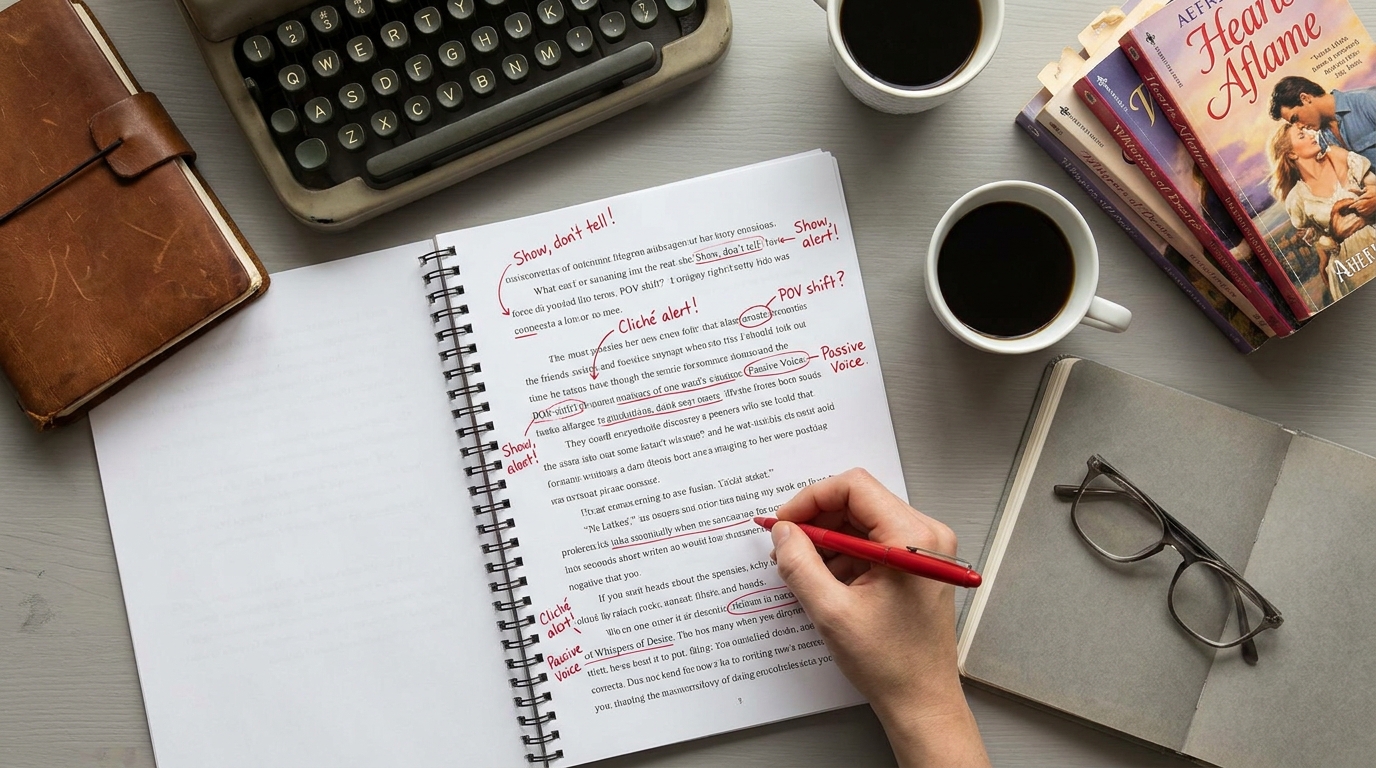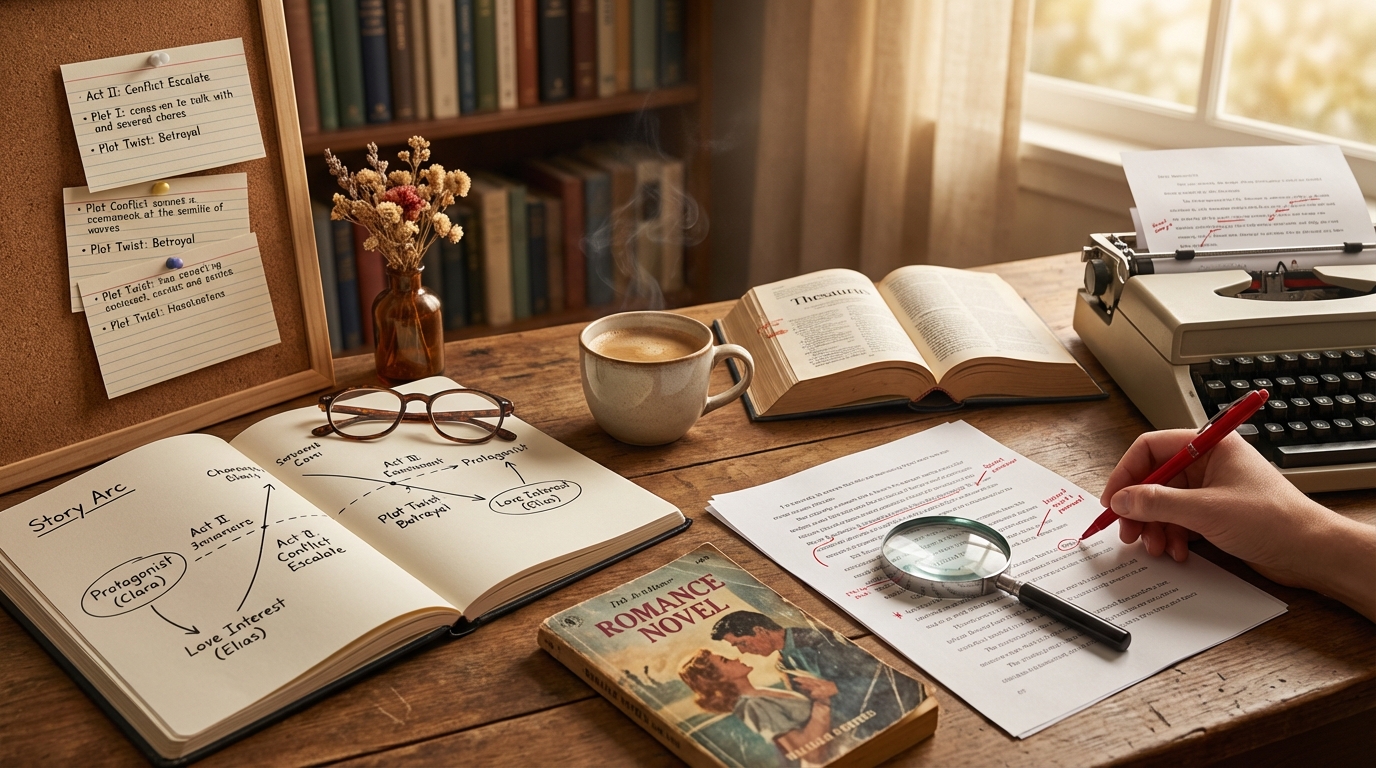
Why the 48-Hour Rule Changes Everything for Romance Authors
After editing hundreds of romance manuscripts, I've learned that the biggest mistake authors make isn't in their first draft—it's jumping into editing too quickly. When you're self editing romance novel manuscripts, that 48-hour cooling period isn't just helpful; it's essential.
Here's what happens when you edit immediately after writing: your brain fills in gaps that aren't actually on the page. You "see" the emotional beat that exists only in your head, or you miss the fact that your hero confessed his love twice in two different ways. Distance gives you the closest thing to fresh eyes you can get on your own work.
In manuscripts I edit, I often see authors who've spent weeks tweaking the same three chapters while completely missing major plot holes later in the book. The 48-hour method forces you to see the forest before you get lost in the trees.
Day One: The Big Picture Sweep
Your first day of self editing romance novel content should focus entirely on the macro elements. Resist the urge to fix typos or fiddle with word choices—you're looking at architecture, not paint colors.
Plot and Pacing Evaluation
Read through your entire manuscript in one sitting if possible. Yes, it's exhausting, but it's the only way to truly assess pacing. As you read, ask yourself:
- Does each scene move the plot or relationship forward?
- Are there any "dead" chapters where nothing significant happens?
- Does the external plot support or compete with the romance?
I frequently see manuscripts where the romance stalls in the middle while the author focuses on external plot. Remember: in romance, the relationship is the main plot.
Character Arc Assessment
Your protagonists should be different people by the end of the book—not just in love, but genuinely changed. Track each character's emotional journey:
- What limiting belief does each character start with?
- How do they challenge each other to grow?
- Is their character growth earned through conflict and choice?
One red flag I see constantly: characters who change their fundamental beliefs about love simply because they met the right person. Real transformation requires struggle and active choice.
Romance Beat Check
Every romance needs certain emotional milestones, but they should feel organic, not formulaic. Verify you have:
- The meet-cute or initial conflict that establishes their dynamic
- Growing attraction with believable obstacles
- The first vulnerability moment where one character risks emotional exposure
- The point of no return where they commit to trying
- The dark moment where it seems impossible
- The grand gesture or realization that solves the real problem
- The satisfying resolution that shows their new life together
These don't need to happen in this exact order, but each beat should feel inevitable in retrospect.
Day Two: The Detail Dive
Now you get to focus on the elements that make or break reader immersion. This is where self editing romance novel manuscripts gets into the nitty-gritty craft elements.
Dialogue That Actually Sounds Like Your Characters
Read all dialogue out loud—seriously, every word. Your mouth will catch awkwardness your eyes miss. Each character should have a distinct voice that reflects their background, personality, and current emotional state.
Common dialogue issues I catch in editing:
- Characters who all sound like the author
- Overly formal speech that no one uses in real life
- "As you know, Bob" exposition dumped into conversation
- Emotional declarations that feel unearned or premature
Pay special attention to your love scenes. The dialogue here should feel intimate and specific to these characters, not like generic romance novel speak.
Scene Transitions and Flow
Choppy transitions jolt readers out of the story. Between every scene, ask: How much time has passed? Where are we now? Who's present? You don't need to explain everything, but readers shouldn't have to work to orient themselves.
I see this issue most often in manuscripts where authors have combined or moved scenes during earlier drafts. A simple transition line can make all the difference.
Consistency Deep Dive
Create a character bible as you read, noting:
- Physical descriptions (eye color, height, distinguishing features)
- Background details (job, family, hometown)
- Personality traits and quirks
- Timeline of events
In one recent manuscript, the heroine's eyes changed color three times, and the hero's "dead" father showed up for Sunday dinner in chapter twelve. These details matter more in romance because readers form such strong emotional connections to characters.
Your Romance-Specific Self-Editing Checklist
Before you call your self editing romance novel process complete, run through this romance-specific checklist:
Emotional Stakes
- Is it clear what each character risks by falling in love?
- Do the stakes feel proportional to their resistance?
- Are we inside their heads during key emotional moments?
Physical Chemistry
- Do you show attraction through specific, concrete details?
- Does physical intimacy progress naturally with emotional intimacy?
- Are love scenes integral to the relationship development?
Conflict Resolution
- Does the final conflict address the real emotional obstacles?
- Do both characters have to change or sacrifice something?
- Is the resolution satisfying but not too easy?
When Self-Editing Isn't Enough: Knowing Your Limits
Here's the honest truth: self-editing has limits, and recognizing them is part of being a professional author. You're too close to your own work to catch everything, no matter how systematic your process.
Self-editing works best for:
- Identifying major structural issues
- Catching obvious inconsistencies
- Improving dialogue flow and character voice
- Strengthening emotional beats you know are weak
But you'll likely miss:
- Subtle pacing issues that become apparent only to fresh eyes
- Blind spots in your writing (we all have them)
- Market expectations and genre conventions you take for granted
- Line-level issues that require technical expertise
The goal of self editing romance novel manuscripts isn't to replace professional editing—it's to make your manuscript as strong as possible before you invest in professional help. Think of it as renovation before the final inspection.
Making the Most of Your 48 Hours
This intensive method works because it mimics how professional editors approach manuscripts: big picture first, then drilling down to details. It also respects your time and energy by giving you a concrete endpoint.
Remember, perfection isn't the goal—improvement is. Every book you write, every editing pass you complete, makes you a stronger writer. The authors I work with who improve fastest are the ones who embrace the process, learn from each project, and keep writing.
Your romance deserves readers who will fall in love with your characters as much as you have. These 48 hours of focused self-editing will help you give them a story worthy of that investment.
Frequently Asked Questions
How long should I wait before self-editing my romance novel?
Wait at least 48 hours after finishing your draft before beginning self-editing. This cooling period helps you see your manuscript with fresher eyes and catch issues you'd miss when the story is still too fresh in your mind.
What's the difference between self-editing and professional editing for romance novels?
Self-editing focuses on big picture issues you can identify yourself—plot holes, character consistency, and obvious dialogue problems. Professional editing catches subtle craft issues, market concerns, and provides the objective perspective that's impossible to achieve on your own work.
Should I fix grammar and typos during my first self-editing pass?
No, focus on big picture elements first—plot, character arcs, and romance beats. Save line-level editing for later passes. You might end up cutting or heavily revising scenes, making early grammar fixes a waste of time.
How do I know if my romance novel is ready for professional editing?
Your manuscript should have a complete plot with consistent characters, proper story structure, and romance beats that feel earned. If you're still making major plot or character changes, continue self-editing before investing in professional services.
Ready to Take Your Manuscript to the Next Level?
As a developmental editor specializing in romance fiction, I help authors strengthen their stories, deepen their characters, and polish their prose. Let's work together to make your book shine.
Learn About My Editing Services →