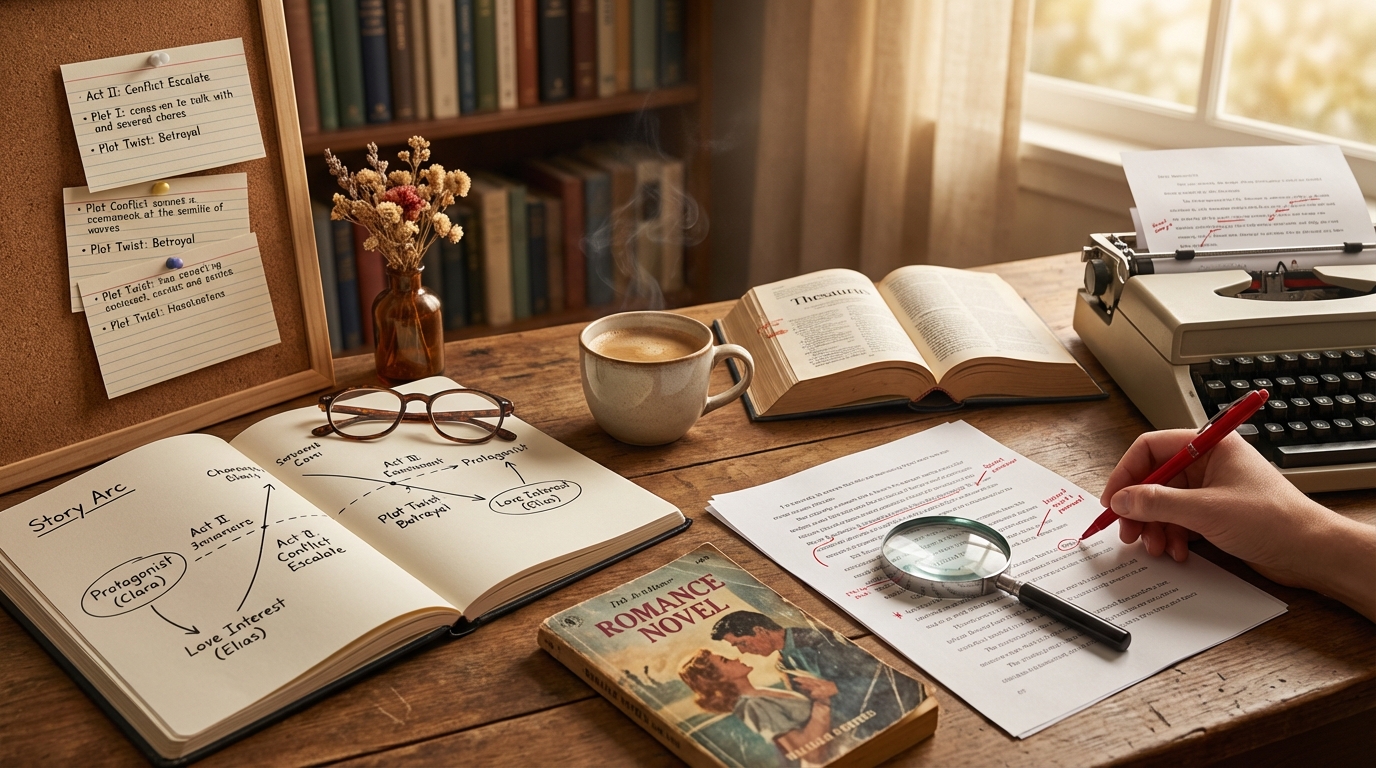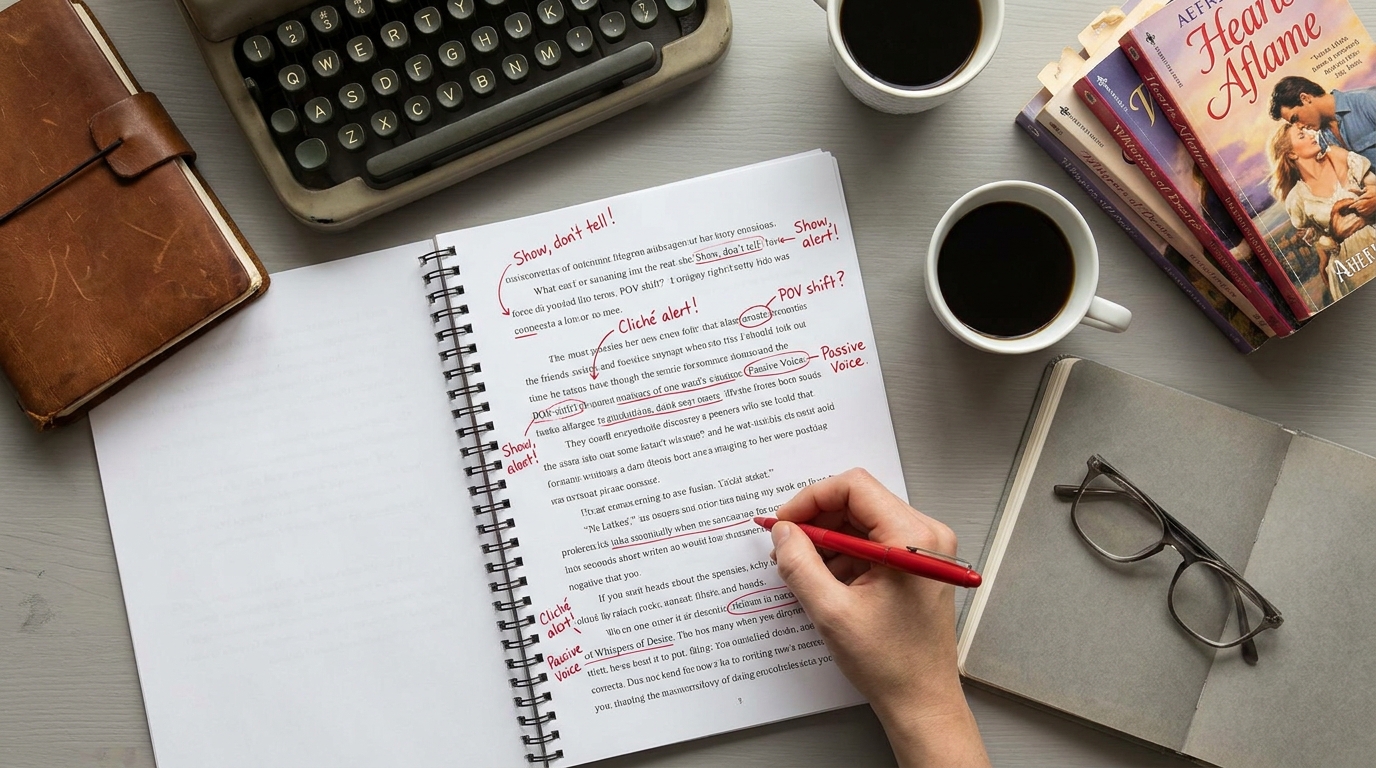
After editing hundreds of romance manuscripts, I can spot a debut author's work within the first few pages. It's not the big-picture issues—most new authors get help with plot structure and character development early on. Instead, it's the subtle, seemingly minor editing oversights that immediately signal amateur status to romance readers.
These hidden mistakes slip past spell-check and even some professional editors. But romance readers? They notice. And unfortunately, these small details can pull readers right out of your carefully crafted love story, costing you reviews, recommendations, and repeat readers.
The good news is that once you know what to look for, these romance novel editing mistakes new authors make are entirely fixable. Let me walk you through the most common ones I see and how to polish them away.
Character Voice Inconsistencies That Break the Spell
In manuscripts I edit, I often see authors who nail their characters' voices in early chapters, then gradually lose that distinctive personality as the story progresses. Your brooding billionaire hero might start with sharp, economical dialogue, but by chapter fifteen, he's suddenly verbose and emotional in ways that contradict his established personality.
This happens because as writers, we naturally evolve our understanding of characters as we write. The problem? We forget to go back and ensure consistency throughout the entire manuscript.
The Personality Quirk Problem
I recently edited a contemporary romance where the heroine had a charming habit of mixing up common phrases—she'd say things like "that's water under the fridge" instead of "water under the bridge." It was endearing and distinctive. But this quirk appeared in chapters one, three, and seven, then completely disappeared for the rest of the book.
Romance readers invest emotionally in characters, and these small personality details matter enormously. When they vanish without explanation, it feels like betrayal.
Quick Fix Strategy
Create a character voice document for each main character. Include:
- Sample dialogue showing their speech patterns
- List of personality quirks and when they appear
- Emotional triggers and how they typically respond
- Internal thought patterns and recurring concerns
During your final edit, read each character's dialogue separately, checking for consistency in voice, vocabulary, and behavioral patterns.
Timeline and Continuity Errors That Shatter Immersion
Some of the most jarring romance novel editing mistakes new authors make involve timeline inconsistencies. I've seen characters go apple picking in December, experience snow in July (outside of fantasy settings), and celebrate Christmas twice in the same year.
These errors happen because romance novels often span several months, and it's easy to lose track of time passage. But romance readers are detail-oriented, and seasonal continuity mistakes pull them straight out of the romantic atmosphere you've worked so hard to create.
The Season Slip-Up
In one manuscript, the author beautifully described autumn leaves falling during the characters' first meeting in "early October." Two chapters later—supposedly only three weeks later—the heroine was planting spring bulbs and the hero was commenting on "the warm May weather." The romance was compelling, but this timeline confusion completely disrupted the story's credibility.
Common Timeline Traps
- Starting in one season and forgetting to track seasonal changes
- Inconsistent day-of-week references ("last Tuesday" when it should be "last Wednesday")
- Characters' ages changing mid-story without explanation
- Holiday references that don't match the established timeline
Prevention Tactics
Create a simple timeline document as you write. Mark major events, seasonal changes, and important dates. During editing, cross-reference any time or date mentions against this master timeline. Pay special attention to:
- Weather descriptions matching the season
- Appropriate clothing and activities for the time of year
- Holiday references and seasonal celebrations
- Character birthdays and ages
Internal Monologue Overload and Emotional Telling
New romance authors often rely too heavily on internal monologue tags and emotional telling rather than showing. I regularly see manuscripts peppered with "she thought," "he realized," and "she felt" to the point where the prose becomes repetitive and the pacing drags.
The Tag Trap
Consider this example from a recent edit:
"Sarah looked at him and felt confused. Why is he being so nice? she thought. She realized she didn't trust his kindness and felt suspicious. Men like him usually want something, she thought to herself."
The emotional weight gets lost in all those tags. Compare that to:
"Sarah studied his face, searching for the catch. Men like him didn't offer help without expecting something in return. So what do you really want?"
Show, Don't Tell Emotional States
Instead of writing "she felt nervous," show nervousness through:
- Physical reactions (fidgeting, shallow breathing)
- Behavioral changes (stumbling over words, avoiding eye contact)
- Internal dialogue that reveals the worry without naming it
- Environmental awareness (noticing sounds, temperatures, details)
Romance readers want to experience emotions alongside your characters, not be told about them secondhand.
Scene Transitions That Kill Romantic Tension
Poor scene transitions are among the most overlooked romance novel editing mistakes new authors make, yet they're crucial for maintaining romantic tension. I've seen beautiful, emotionally charged scenes followed by abrupt, jarring transitions that completely deflate the romantic mood.
The Tension Killer
Picture this: your characters have just shared an emotionally vulnerable moment, perhaps a near-kiss interrupted by external circumstances. The romantic tension is perfect. Then the next scene starts with: "The next morning, Jake ate breakfast."
All that carefully built tension? Gone.
Transition Techniques That Preserve Mood
Effective scene transitions in romance should:
- Acknowledge the emotional aftermath of the previous scene
- Show how the previous scene's events affected the character
- Use sensory details that echo or contrast with the previous mood
- Maintain the emotional thread that connects scenes
Instead of "The next morning, Jake ate breakfast," try: "Jake spent the night replaying every word of their conversation, and by morning, coffee tasted like a poor substitute for answers."
The Emotional Bridge
Think of scene transitions as emotional bridges. Each one should honor where your characters were emotionally and show how they're processing or carrying those feelings forward. This keeps readers emotionally invested and maintains the romantic thread throughout your story.
Polishing Your Professional Edge
These subtle editing issues might seem minor, but they're often what separates published-quality work from amateur efforts. Romance readers have sophisticated expectations, and meeting them requires attention to these detailed aspects of craft.
The most encouraging thing I can tell you? Every successful romance author has made these mistakes. The difference between amateur and professional isn't avoiding mistakes entirely—it's developing the editing eye to catch and fix them before publication.
Many romance novel editing mistakes new authors make stem from the same source: writing in creative flow without stepping back to see the bigger picture. That's exactly how it should be during drafting! But during editing, you need to shift from writer mode to reader mode, experiencing your story as your audience will.
Take your time with these details. Your future readers—and your author reputation—will thank you for the extra effort. Remember, every published author started exactly where you are now, learning these lessons and refining their craft. You're not behind; you're exactly where you need to be in your writing journey.
Frequently Asked Questions
What are the most common editing mistakes in romance novels that mark authors as beginners?
The most common mistakes include inconsistent character voice across chapters, timeline and seasonal continuity errors, overuse of internal monologue tags instead of showing emotions, and poor scene transitions that kill romantic tension. These subtle issues immediately signal amateur status to romance readers.
How can I maintain consistent character voice throughout my romance novel?
Create a character voice document for each main character that includes sample dialogue, personality quirks, emotional triggers, and thought patterns. During final edits, read each character's dialogue separately to check for consistency in speech patterns and behavior.
Why do timeline errors matter so much in romance novels?
Romance readers are detail-oriented and emotionally invested in the story world. Timeline inconsistencies like seasonal errors or impossible date progressions break immersion and destroy the credibility of your carefully crafted romantic atmosphere.
What's wrong with using internal monologue tags like 'she thought' in romance writing?
Overusing internal monologue tags creates repetitive prose and slows pacing. Instead of telling readers what characters think or feel, show emotions through physical reactions, behavioral changes, and environmental awareness to create a more immersive reading experience.
Ready to Take Your Manuscript to the Next Level?
As a developmental editor specializing in romance fiction, I help authors strengthen their stories, deepen their characters, and polish their prose. Let's work together to make your book shine.
Learn About My Editing Services →