Understanding the Romance Editor Cost Breakdown
Let's be honest—as an indie romance author, you've probably stared at editing quotes and wondered why prices vary so dramatically. One editor charges $500 for your 80,000-word manuscript, while another quotes $2,500. What's the difference, and more importantly, what are you actually paying for?
After editing hundreds of romance manuscripts over the years, I've seen authors make costly mistakes by choosing based solely on price. The truth is, understanding the romance editor cost breakdown isn't just about finding the cheapest option—it's about making an informed investment in your book's success.
In this guide, I'll walk you through exactly what different editing services cost, why prices vary, and how to budget effectively without compromising your manuscript's quality.
The Three Types of Editing: Understanding Your Investment
Not all editing is created equal, and this is where most authors get confused about pricing. Think of editing as home renovation—you wouldn't pay the same price for interior design consultation as you would for rewiring the entire house.
Developmental Editing: The Foundation ($0.08-$0.15 per word)
This is the big-picture editing that examines your story's structure, character development, pacing, and plot holes. In romance manuscripts I edit, I'm looking at whether your meet-cute feels authentic, if the emotional arc supports the romantic tension, and whether your black moment truly threatens the relationship.
For an 80,000-word romance novel, expect to invest $2,400-$4,500. Yes, it's the most expensive type of editing, but it's also the most transformative. I've seen manuscripts go from "almost there" to "absolutely compelling" after developmental editing.
What you're paying for: Detailed feedback on plot structure, character motivation, pacing issues, genre expectations, and overall story coherence. You'll receive a comprehensive editorial letter plus margin comments throughout your manuscript.
Line Editing: Polishing Your Voice ($0.05-$0.10 per word)
Line editing focuses on your writing style, flow, and clarity at the sentence and paragraph level. This is where we ensure your heroine's internal monologue doesn't sound identical to your hero's dialogue, and where awkward phrasing gets smoothed into prose that draws readers in.
Budget $1,600-$3,200 for that same 80,000-word manuscript. Line editing is where your unique voice truly shines while maintaining readability.
What you're paying for: Sentence-level improvements, voice consistency, flow enhancement, word choice refinement, and elimination of redundancies or awkward constructions.
Copy Editing and Proofreading: The Final Polish ($0.02-$0.05 per word)
This catches grammar, punctuation, spelling, and consistency errors. While essential, it won't fix fundamental story problems. I often see authors rush to this stage too early, thinking it will solve deeper issues with their manuscript.
Expect to invest $640-$1,600 for copy editing. Proofreading (the final step after formatting) typically runs $400-$800.
What you're paying for: Grammar and punctuation corrections, spelling checks, consistency in character names and details, formatting cleanup, and final typo elimination.
How Manuscript Length and Complexity Affect Your Budget
Here's where the romance editor cost breakdown gets more nuanced. A 60,000-word contemporary romance with a straightforward plot will cost less than an 80,000-word fantasy romance with multiple POVs and a complex magic system.
Length Considerations
Most editors price by word count, but don't just multiply the per-word rate by your manuscript length. Many editors offer sliding scales:
- Under 50,000 words: Often higher per-word rates due to minimum project fees
- 50,000-80,000 words: Standard romance novel pricing
- Over 80,000 words: May qualify for volume discounts
Complexity Factors That Increase Costs
In manuscripts I edit, certain elements require additional attention and may increase your investment:
- Multiple POVs: Each voice needs distinct development
- Historical settings: Require accuracy checks and period-appropriate language
- LGBTQ+ characters: Need sensitivity readers in addition to editing
- Paranormal/fantasy elements: World-building consistency takes extra time
- Series continuity: Checking consistency across multiple books
Red Flags: When "Cheap" Editing Costs You More
I've worked with authors who've spent money on editing twice—once on a too-good-to-be-true service, then again on quality editing to fix the problems. Here are the warning signs that should make you pause:
Pricing Red Flags
- Flat rates regardless of manuscript length: "$200 for any manuscript" means someone isn't actually reading your work
- Extremely low per-word rates: Under $0.01 per word usually means overseas services with limited English fluency
- "Complete editing" packages: No legitimate editor can do developmental, line, and copy editing simultaneously
Service Red Flags
Be wary of editors who:
- Promise 24-48 hour turnarounds for full manuscripts
- Don't provide samples of their editing style
- Can't explain the difference between editing types
- Guarantee specific sales results or bestseller status
- Don't have experience in romance fiction
Smart Budgeting: When to Save vs. When to Invest
Understanding the romance editor cost breakdown helps you prioritize your spending. Here's how to budget strategically across your publishing journey.
Your First Romance Novel: Investment Priorities
Must-have: Developmental editing. Your first novel needs structural guidance that only comes with experience. This investment teaches you craft principles you'll use in every future book.
Consider carefully: Line editing. If budget is tight, focus on self-editing techniques and critique partners after developmental editing.
Non-negotiable: Copy editing/proofreading. Readers forgive many things, but not basic errors that pull them out of the story.
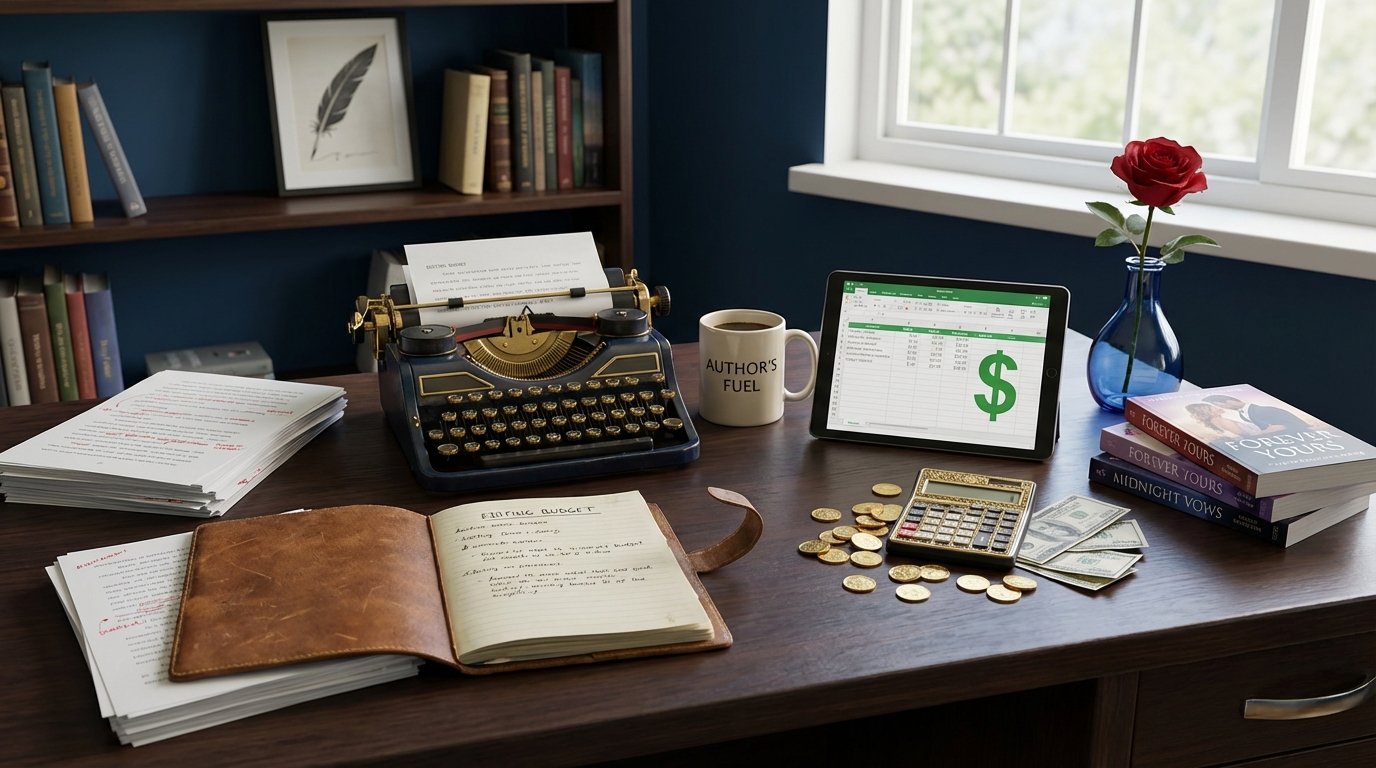
Building Your Editing Budget Over Time
Books 1-3: Prioritize developmental editing as you're still learning story structure and genre conventions.
Books 4-6: As your storytelling improves, shift budget toward line editing to develop your unique voice.
Established authors: May need only line editing and copy editing, having mastered story structure through experience.
Money-Saving Strategies That Don't Compromise Quality
- Self-edit first: Use my editing checklist approach to catch obvious issues before professional editing
- Join critique groups: Get developmental feedback that reduces editing needs
- Bundle services: Many editors offer discounts for multiple editing passes
- Plan ahead: Booking in advance often secures better rates than rush jobs
Making the Investment: What Quality Editing Actually Delivers
When you understand the full romance editor cost breakdown, you realize you're not just paying for error correction—you're investing in your growth as a writer and your book's market potential.
Quality editing delivers:
- Improved craft skills: Every edit teaches you something about storytelling
- Reader satisfaction: Professional editing means better reviews and word-of-mouth
- Time savings: Learning from editor feedback makes future books stronger from the start
- Market credibility: Professional polish helps your book compete with traditionally published titles
Remember, every successful romance author started where you are now—balancing dreams with budgets, hoping their stories find the readers who need them. The investment you make in professional editing isn't just about this one manuscript; it's about your entire writing career. Choose wisely, budget realistically, and trust that every dollar spent on quality editing brings you closer to the author you're meant to become.
Frequently Asked Questions
How much should I budget for editing my first romance novel?
For an 80,000-word romance novel, budget $3,000-$5,000 total for all editing stages. Prioritize developmental editing ($2,400-$4,500) first, as it provides the most value for new authors learning story structure and genre conventions.
Why do romance editors charge different rates for the same word count?
Rates vary based on editing type (developmental vs. copy editing), editor experience, manuscript complexity, and turnaround time. A historical romance with multiple POVs requires more work than a simple contemporary, affecting the final cost.
Is it worth paying more for an editor who specializes in romance?
Absolutely. Romance-specialized editors understand genre conventions, trope execution, and reader expectations that general editors might miss. They can spot when your meet-cute feels forced or your black moment doesn't threaten the relationship convincingly.
Can I skip developmental editing if I'm on a tight budget?
For your first few novels, developmental editing provides the most value by teaching story structure and craft fundamentals. Consider joining critique groups for developmental feedback first, then invest in professional line editing and copy editing.
Ready to Take Your Manuscript to the Next Level?
As a developmental editor specializing in romance fiction, I help authors strengthen their stories, deepen their characters, and polish their prose. Let's work together to make your book shine.
Learn About My Editing Services →