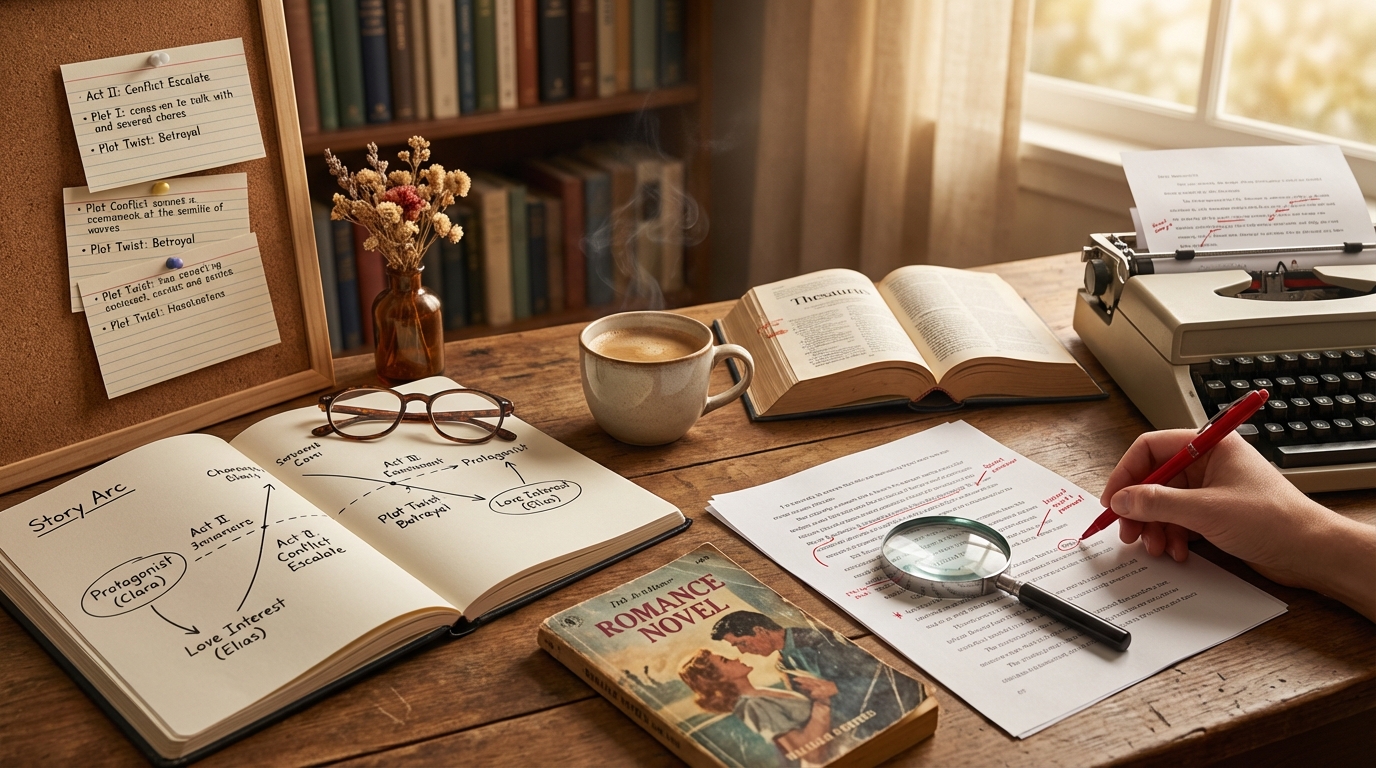
As a romance editor, I've seen countless manuscripts cross my desk—some that make my heart race and others that leave me cold despite beautiful prose. The difference often comes down to whether the author has nailed the essential elements that make romance readers fall in love with a story. That's why I've created this comprehensive romance editing checklist to help you ensure your manuscript hits every crucial beat.
Whether you're preparing for professional editing or doing a final self-edit pass, this romance editing checklist will help you identify potential gaps in your story and strengthen the elements that matter most to romance readers.
Story Structure and Romance Beats
Romance novels follow specific story beats that readers expect, even if they're not conscious of them. Missing these beats can leave readers feeling unsatisfied, even if they can't pinpoint why.
1. The Meet-Cute or Initial Encounter
Your protagonists' first meeting should be memorable and establish the initial attraction or conflict. In manuscripts I edit, I often see authors rush through this moment, but it deserves careful attention. Whether it's enemies-to-lovers tension or instant attraction, this scene sets the tone for their entire relationship arc.
2. The Inciting Incident
What forces your characters together? This could be a fake dating arrangement, a marriage of convenience, or being snowed in together. This plot device should feel organic to your story world, not contrived.
3. Progressive Relationship Milestones
Romance readers want to see the relationship develop through specific stages: attraction, first physical contact, emotional vulnerability, conflict, and resolution. Each milestone should feel earned and advance both the romantic plot and character development.
4. The Black Moment
This is when everything falls apart—usually around 75-80% through your manuscript. The conflict should feel insurmountable and directly threaten the romantic relationship. Weak black moments are one of the most common issues I encounter in developmental editing.
5. The Satisfying Resolution
Romance requires a happily ever after (HEA) or happy for now (HFN) ending. Your resolution should address the central conflict convincingly and show readers how the couple will make their relationship work going forward.
Character Development and Chemistry
Romance lives and dies by its characters. Your romance editing checklist must include thorough character evaluation to ensure readers connect emotionally with your protagonists.
6. Individual Character Arcs
Each protagonist needs their own character arc separate from the romance. What internal conflict must they resolve? How do they grow throughout the story? The romantic relationship should catalyze this growth, not replace it entirely.
7. Sexual and Emotional Tension
Tension is the engine that drives romance forward. In every scene with your couple, ask yourself: what's preventing them from being together right now? The obstacles can be external (circumstances) or internal (fear, past trauma, conflicting goals), but they must feel real and compelling.
8. Authentic Dialogue and Banter
Great romantic dialogue reveals character while building intimacy. Your protagonists should have a unique dynamic—whether it's witty banter, deep philosophical discussions, or gentle teasing. I often see manuscripts where the dialogue feels generic rather than specific to these particular characters.
9. Believable Character Motivation
Why do these characters fall for each other? "Because they're both attractive" isn't enough. Romance readers want to understand what draws these specific people together—shared values, complementary strengths, or the way one challenges the other to grow.
Genre-Specific Elements
Different romance subgenres have specific expectations. Your romance editing checklist should account for your particular niche.
10. Subgenre Trope Execution
Whether you're writing enemies-to-lovers, second chance romance, or workplace romance, readers have expectations about how these tropes unfold. You can subvert expectations, but you need to understand them first. Research successful books in your subgenre and note how they handle common elements.
11. World-building (For Paranormal, Fantasy, or Historical)
If your romance has speculative or historical elements, the world-building must support the romantic arc. Historical details should enhance the romantic tension (think social conventions that make stolen kisses more meaningful), not overwhelm the love story.
Pacing and Tension Management
12. Scene-Level Romance Purpose
Every scene in a romance should either advance the romantic relationship or develop the characters in ways that affect their romantic arc. If a scene doesn't serve the romance, consider cutting it or finding ways to incorporate romantic elements.
13. Emotional Pacing
Romance readers want emotional highs and lows. Vary the intensity—follow a high-tension confrontation with a quiet moment of vulnerability, or balance a steamy scene with emotional introspection. This creates the emotional roller coaster that keeps readers turning pages.
Technical Considerations for Intimate Scenes
14. Heat Level Consistency
Your intimate scenes should match your story's overall heat level and feel organic to your characters' relationship development. Whether you write sweet or steamy romance, the physical intimacy should align with the emotional intimacy you've built.
15. Consent and Communication
Modern romance readers expect clear consent and healthy communication patterns, even in fantasy or historical settings. This doesn't mean your characters can't have conflicts or make mistakes, but the overall relationship dynamic should model emotional intelligence and respect.
Putting Your Romance Editing Checklist Into Action
When using this romance editing checklist, I recommend reading through your entire manuscript first with just one or two elements in mind. For example, read once focusing solely on character development, then again examining pacing and tension. Trying to catch everything in one pass often means missing crucial issues.
Don't be discouraged if your manuscript doesn't hit every point perfectly on the first try. In my editing experience, even published authors rarely nail all these elements in their first draft. The goal is to identify areas for improvement and strengthen your story's romantic core.
Remember, rules in romance exist because they work—they create the emotional experience readers seek. Once you master these fundamentals, you'll have the foundation to innovate and make these classic elements your own. Trust the process, trust your story, and trust that with each revision, you're getting closer to creating the kind of romance that readers will treasure.
Frequently Asked Questions
What makes a romance editing checklist different from general fiction editing?
Romance editing focuses specifically on relationship development, emotional pacing, genre expectations, and romantic story beats that general fiction doesn't require. Romance has unique structural elements like the meet-cute, black moment, and HEA that must be present and well-executed.
How do I know if my romance has enough sexual tension?
Sexual tension exists when there are compelling reasons your characters can't be together yet, combined with obvious attraction. Every scene with both protagonists should have some element that either builds or addresses this tension.
What's the difference between a black moment and regular conflict in romance?
The black moment is the major crisis that threatens to end the romantic relationship permanently, usually occurring around 75-80% through the story. It's more severe than regular conflict and must feel like the relationship is truly over before the final resolution.
Should intimate scenes always advance the plot in romance novels?
Yes, intimate scenes should advance either the romantic relationship or character development. They should feel earned based on the emotional intimacy you've built and match your story's established heat level and the characters' relationship stage.
Ready to Take Your Manuscript to the Next Level?
As a developmental editor specializing in romance fiction, I help authors strengthen their stories, deepen their characters, and polish their prose. Let's work together to make your book shine.
Learn About My Editing Services →