As a romance editor, I can't tell you how many authors come to me asking for "editing" without knowing exactly what their manuscript needs. Last week alone, I had three different authors request line editing when their stories desperately needed developmental work first. Understanding the difference between developmental editing vs line editing romance manuscripts isn't just about getting the right service—it's about investing your time and budget where it'll make the biggest impact on your book's success.
Let me walk you through exactly what each type of editing does for your romance manuscript, so you can make the smartest choice for your story.
What Is Developmental Editing and Why Romance Novels Need It
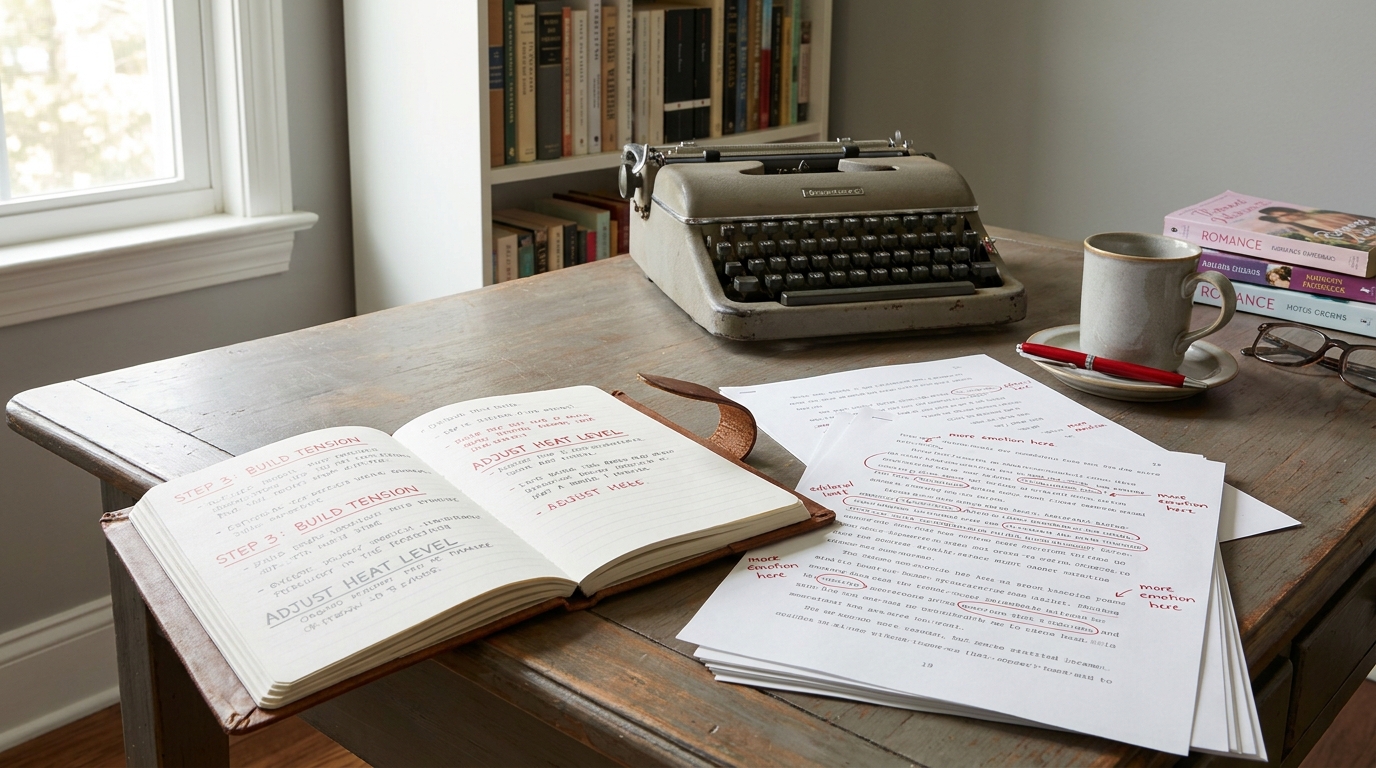
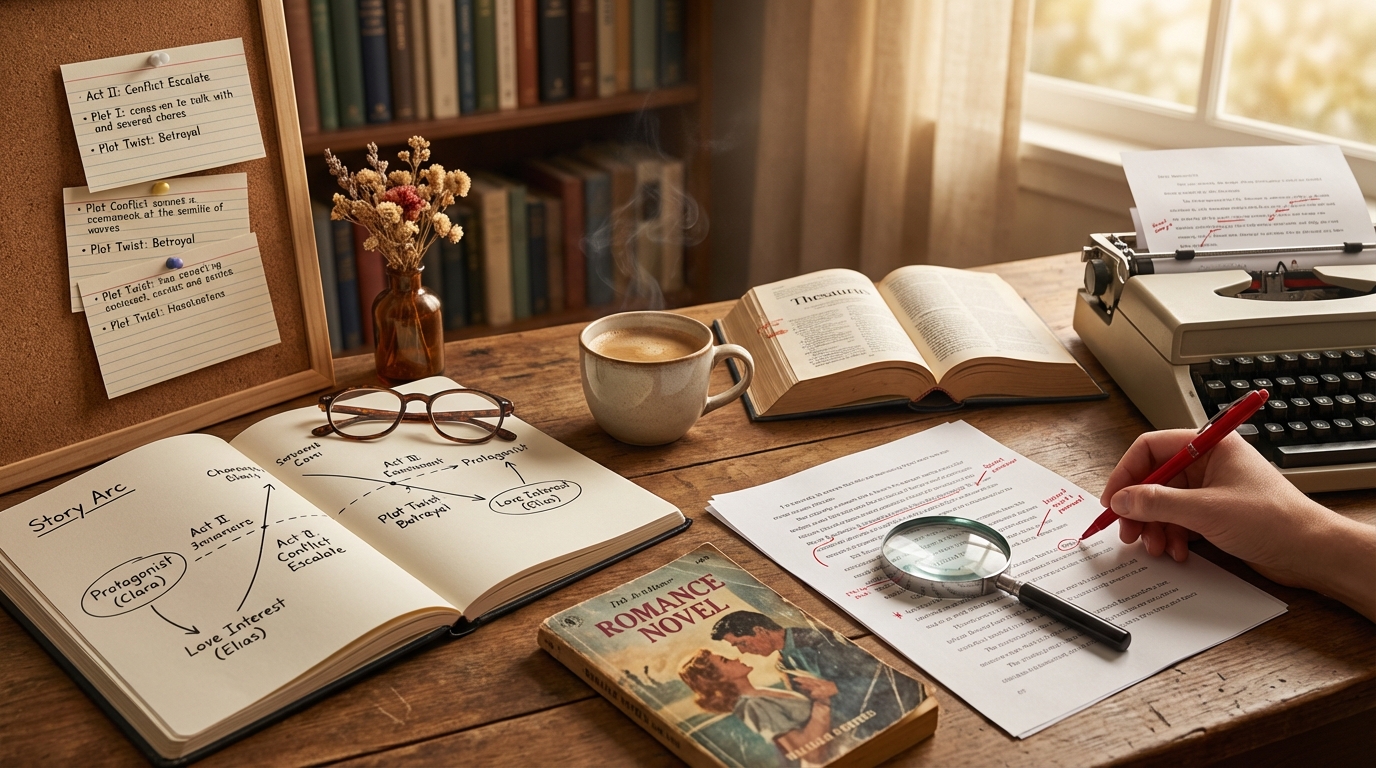
Developmental editing is the big-picture edit that focuses on story structure, character development, and overall narrative flow. For romance novels specifically, this means examining whether your love story actually works on a fundamental level.
In manuscripts I edit, developmental issues often show up as:
- Weak romantic tension: The characters like each other from page one with no real obstacles
- Underdeveloped character arcs: Your heroine is the same person at the end as she was at the beginning
- Plot holes in the romance: The couple's first fight feels manufactured or their reasons for being apart don't hold water
- Pacing problems: They fall in love too quickly or the middle of the book drags without romantic development
- Unsatisfying emotional payoff: The happily ever after feels unearned
Think about a book like Pride and Prejudice. A developmental editor working on that manuscript might focus on Elizabeth's prejudice arc, ensuring Darcy's character growth is believable, or making sure the external plot points (Wickham, Lydia's elopement) serve to bring the main couple together rather than just create random drama.
When Your Romance Manuscript Needs Developmental Editing
You likely need developmental editing if beta readers or critique partners have mentioned:
- "I didn't feel the chemistry between them"
- "The conflict felt forced"
- "I was bored in the middle"
- "The ending happened too fast"
- "I didn't understand why she chose him"
Developmental editing typically involves restructuring scenes, deepening character motivations, and sometimes major rewrites. It's intensive work, but it's what transforms a story with potential into a story that keeps readers up all night.
Understanding Line Editing for Romance Fiction
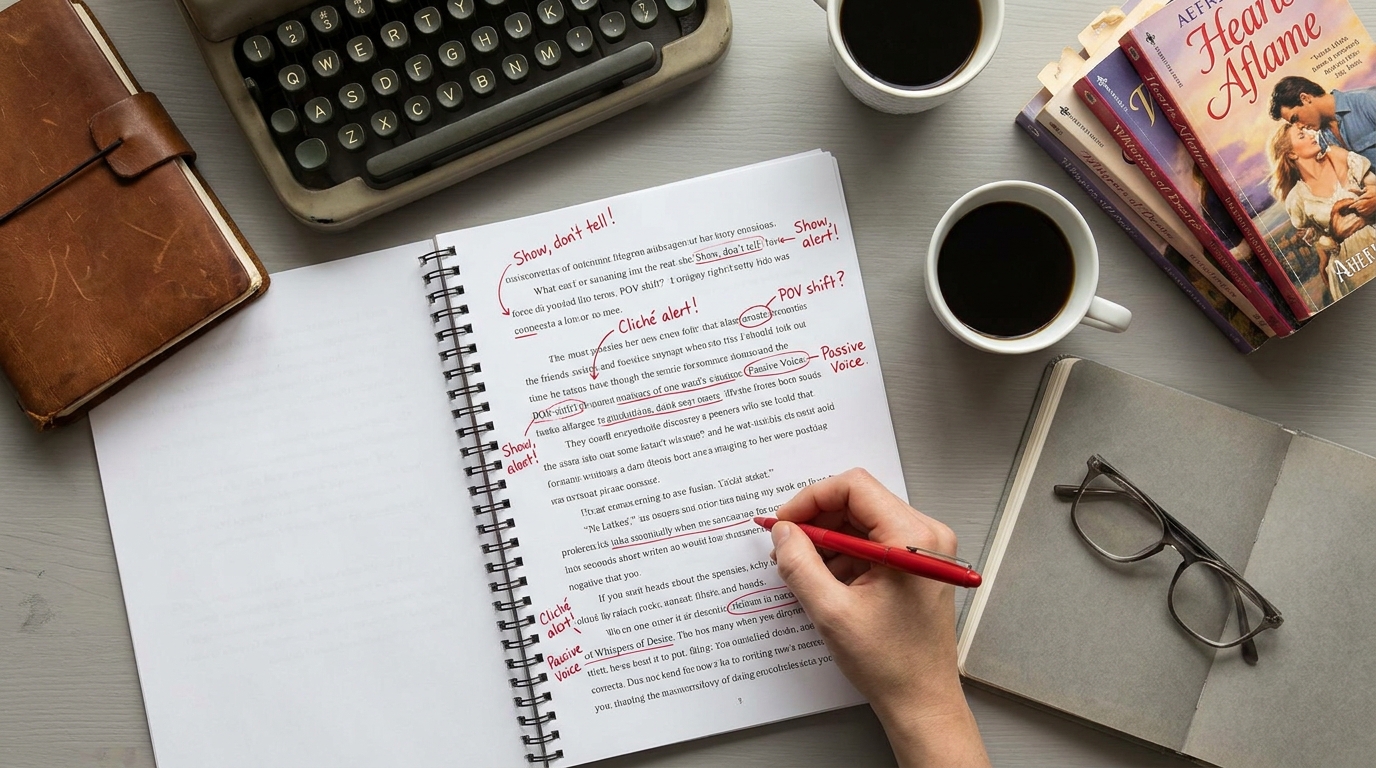
Line editing focuses on the craft of writing itself—sentence structure, word choice, dialogue flow, and voice consistency. For romance novels, line editing is where the magic of intimate scenes, witty banter, and emotional moments really comes alive on the page.
When I'm doing line editing on romance manuscripts, I'm looking at:
- Dialogue authenticity: Does their banter sound natural or stilted?
- Intimate scene flow: Are the love scenes emotionally connected and well-paced?
- Voice consistency: Does your heroine sound like herself throughout, or does she suddenly become more formal in chapter twelve?
- Emotional beats: Are the moments of vulnerability, anger, or passion landing with the right impact?
- Sensory details: Can readers feel the tension in the room or the character's racing heart?
Line editing might turn a sentence like "She was angry at him" into "Heat flooded her cheeks as she watched him dismiss her concerns with that infuriating half-smile."
Signs Your Romance Needs Line Editing
Consider line editing if feedback includes:
- "The dialogue felt clunky"
- "I couldn't connect emotionally"
- "The intimate scenes were awkward"
- "Something felt off about the writing style"
- "I wanted more emotional depth"
Line editing assumes your story structure is solid. If readers are saying your plot doesn't work, line editing won't fix that fundamental issue.
Real Manuscript Examples: Choosing the Right Edit
Let me share some examples from my editing experience to illustrate when to choose developmental editing vs line editing romance manuscripts.
Example 1: The Insta-Love Problem (Needs Developmental Editing)
I recently worked on a contemporary romance where the hero and heroine met, had immediate chemistry, slept together by chapter three, and spent the rest of the book in a happy relationship until a manufactured third-act breakup. The writing was lovely—great dialogue, beautiful intimate scenes, strong voice. But the story didn't work.
This manuscript needed developmental editing to:
- Create meaningful obstacles to their relationship
- Slow down the emotional intimacy to match the timeline
- Develop individual character arcs that intersected with the romance
- Build genuine conflict rooted in character flaws
No amount of line editing would have fixed the fundamental story problems.
Example 2: The Awkward Dialogue Issue (Needs Line Editing)
Another author brought me a historical romance with a solid plot, great character development, and believable romantic tension. But every conversation felt stilted, the intimate scenes lacked emotional connection, and the heroine's voice wavered between authentic and overly modern.
This manuscript had strong bones but needed line editing to:
- Refine dialogue to sound more natural
- Smooth transitions between emotional beats
- Strengthen the connection between physical and emotional intimacy
- Ensure consistent character voice throughout
Developmental editing would have been overkill—the story worked, but the execution needed polish.
Making the Budget-Smart Choice for Indie Authors
Here's the honest truth: developmental editing typically costs more and takes longer than line editing. For indie authors on tight budgets, making the wrong choice can be expensive.
Start with Developmental If:
- Beta readers are confused about the plot or character motivations
- You're getting feedback about pacing, structure, or believability
- This is your first or second manuscript
- You feel like something's "off" but can't pinpoint what
Go Straight to Line Editing If:
- Beta readers love the story but mention writing-level issues
- You've already had developmental work done
- Feedback focuses on dialogue, voice, or emotional connection
- You're confident in your story structure
The Smart Approach
Many successful indie authors do developmental editing first, implement changes, then move to line editing. Others start with a developmental edit consultation—a less expensive option where an editor reads your manuscript and provides a detailed editorial letter without line-by-line feedback.
Remember: a beautifully written book with structural problems will still get negative reviews. But a well-structured book with some writing issues can still find its audience and improve with practice.
Questions to Ask Before Choosing Your Edit
Before deciding between developmental editing vs line editing romance manuscripts, honestly answer these questions:
- Do beta readers understand and believe in your characters' motivations?
- Does your romantic conflict feel organic to the characters?
- Can you clearly explain your character arcs in two sentences each?
- Do the major plot points serve the romantic development?
- Does your ending feel earned and satisfying?
If you answered "no" or "I'm not sure" to any of these, developmental editing should come first.
Your romance manuscript is a labor of love, and it deserves the right kind of editorial attention. Whether that's big-picture story development or sentence-level polish, understanding what your book actually needs will help you make the investment that truly serves your story—and your readers.
Trust the process, trust your instincts about what feedback resonates, and remember that every successful romance author has been exactly where you are now, trying to figure out how to make their love story shine.
Frequently Asked Questions
Can I skip developmental editing and go straight to line editing?
Only if your story structure, character development, and romantic arc are already solid. Line editing won't fix plot holes or weak character motivation—it polishes existing good writing.
How do I know if my romance manuscript has developmental issues?
Beta readers typically mention confusion about character motivations, pacing problems, weak chemistry, or unsatisfying plot resolution. If feedback focuses on story-level problems rather than writing style, you likely need developmental editing first.
Which type of editing is more important for romance novels?
Both serve different purposes, but developmental editing typically comes first since it addresses fundamental story issues. A well-structured romance with some writing flaws will perform better than beautifully written romance with plot problems.
Should I do both developmental and line editing on my romance manuscript?
Most successful romance authors use both, but do developmental editing first, implement changes, then move to line editing. This ensures you're not polishing scenes that might need major restructuring.
Ready to Take Your Manuscript to the Next Level?
As a developmental editor specializing in romance fiction, I help authors strengthen their stories, deepen their characters, and polish their prose. Let's work together to make your book shine.
Learn About My Editing Services →